





- University
- Academic
- Schools/Vocational Schools
- Vocational School of Justice
- Vocational School
- Vocational School
- Department of Banking and Insurance (Turkish)
- Department of Computer Programming (Turkish)
- Department of Foreign Trade (Turkish)
- Department of Graphic Design (Turkish)
- Department of Interior Design (Turkish)
- Department of Construction Technology (Turkish)
- Department of Occupational Health and Safety (Turkish)
- Department of Media and Communication (Turkish)
- Department of Architectural Restoration (Turkish)
- Department of Radio and Tv Programming (Turkish)
- Department of Civil Aviation Cabin Services (Turkish)
- Department of Civil Aviation Transportation Management (Turkish)
- Department of Tourism and Hotel Management (Turkish)
- Department of Applied English Translation
- Vocational School Of Health Services
- Vocational School Of Health Services
- Department of Child Development (Turkish)
- Department of Physiotherapy (Turkish)
- Department of Paramedic (Turkish)
- Department of Opticianry (Turkish)
- Department of Medical Documentation and Secreteriat (Turkish)
- Department of Medical Imaging Techniques (Turkish)
- Department of Medical Laboratory Techniques (Turkish)
- Department of Elderly Care (Turkish)
- School of Applied Management Sciences
- School of Foreign Languages
- Faculties
- Faculty of Arts and Sciences
- Faculty of Fine Arts and Design
- Faculty of Law
- Faculty of Communication
- Faculty of Business
- Faculty of Engineering
- Faculty of Engineering
- Department of Computer Engineering
- Department of Biomedical Engineering
- Department of Electrical and Electronics Engineering
- Department of Industrial Engineering
- Department of Food Engineering
- Department of Genetics and Bioengineering
- Department of Aerospace Engineering
- Department of Civil Engineering
- Department of Mechanical Engineering
- Department of Mechatronics Engineering
- Department of Software Engineering
- Faculty of Health Sciences
- Medicine
- Graduate School
- Common Courses
- Schools/Vocational Schools
- Research
- Research Centers
- Library
- Smart Campus
- Technology Transfer Office
- İzmir Sciencepark
- Continuous Education Center (EKOSEM)
- Children's University
- Ethics Committee
- Teaching and Learning Center (EKOEĞİTİM)
- Psychology Application and Research Center
- Researcher Training Coordinatorship
- Research Collaborations And Innovation Coordinatorship
- Campus
- INTERNATIONAL
- Contact
- 25TH YEAR
Department of Nursing
GER 221 | Course Introduction and Application Information
| Course Name |
German III
|
|
Code
|
Semester
|
Theory
(hour/week) |
Application/Lab
(hour/week) |
Local Credits
|
ECTS
|
|
GER 221
|
Fall/Spring
|
2
|
4
|
4
|
0
|
| Prerequisites |
None
|
|||||
| Course Language | ||||||
| Course Type |
Second Foreign Language
|
|||||
| Course Level |
-
|
|||||
| Mode of Delivery | - | |||||
| Teaching Methods and Techniques of the Course | DiscussionGroup WorkQ&ARole PlayingLecture / Presentation | |||||
| National Occupation Classification | - | |||||
| Course Coordinator | ||||||
| Course Lecturer(s) | ||||||
| Assistant(s) | - | |||||
| Course Objectives | |
| Learning Outcomes |
The students who succeeded in this course; - |
| Course Description | |
| Related Sustainable Development Goals |
|
|
|
Core Courses | |
| Major Area Courses | ||
| Supportive Courses | ||
| Media and Management Skills Courses | ||
| Transferable Skill Courses |
WEEKLY SUBJECTS AND RELATED PREPARATION STUDIES
| Week | Subjects | Related Preparation |
| 1 | Education and career Introduction, general information and term rules. The education system in Germany. Modal verb ‘wollen’ in the past tense | |
| 2 | Education and career / Celebrations and gifts dass clauses. Information about personal development courses. Planning a celebration. Possessive forms of nouns. (syntax) | |
| 3 | Celebrations and gifts / Weekend Receiving gifts, being able to talk about gifts, expressing wishes, desires and contradictions (Conjunctive II) (Conjunction: trotzdem) | |
| 4 | Weekend / Reading and understanding cultural programmes Expressing your opinion | |
| 5 | My belongings Being able to describe and compare objects (Adjective inflection) Reading and listening to statistics. (Comparative) (Comparative particle) | |
| 6 | My belongings / Communication At the post office (adjective inflection) (passive present tense) Conducting a telephone conversation. | |
| 7 | Communication Communication in professional life (Question pattern: Was für ein…?) (Verbal nominalisation) | |
| 8 | Being on the road Understanding and giving directions. (Local prepositions) (Conjugation therefore) (Local prepositions) (Adjective inflection) | |
| 9 | MIDTERM WEEK | |
| 10 | Being on the road/Travelling Reading and understanding texts related to vehicles and traffic, and making suggestions Reading and understanding hotel advertisements | |
| 11 | Travel Making holiday reservations (Modal / Temporal Preposition) | |
| 12 | Money Discussing and obtaining information about the bank (indirect questions) | |
| 13 | Money/ Life's milestones Being able to talk and write about money (Verb: lassen) Reading and understanding texts about important people. | |
| 14 | Understanding discussion dialogues (Grammar review) ORAL EXAM | |
| 15 | Life's milestones Talking about desires and dreams | |
| 16 | Review of the Semester |
| Course Notes/Textbooks | |
| Suggested Readings/Materials |
EVALUATION SYSTEM
| Semester Activities | Number | Weigthing |
| Participation | ||
| Laboratory / Application | ||
| Field Work | ||
| Quizzes / Studio Critiques |
1
|
10
|
| Portfolio | ||
| Homework / Assignments |
1
|
10
|
| Presentation / Jury | ||
| Project | ||
| Seminar / Workshop | ||
| Oral Exams |
1
|
20
|
| Midterm |
1
|
20
|
| Final Exam |
40
|
|
| Total |
| Weighting of Semester Activities on the Final Grade | ||
| Weighting of End-of-Semester Activities on the Final Grade | ||
| Total |
ECTS / WORKLOAD TABLE
| Semester Activities | Number | Duration (Hours) | Workload |
|---|---|---|---|
| Theoretical Course Hours (Including exam week: 16 x total hours) |
16
|
2
|
32
|
| Laboratory / Application Hours (Including exam week: '.16.' x total hours) |
16
|
4
|
64
|
| Study Hours Out of Class |
14
|
1
|
14
|
| Field Work |
0
|
||
| Quizzes / Studio Critiques |
1
|
10
|
10
|
| Portfolio |
0
|
||
| Homework / Assignments |
0
|
||
| Presentation / Jury |
0
|
||
| Project |
0
|
||
| Seminar / Workshop |
0
|
||
| Oral Exam |
1
|
8
|
8
|
| Midterms |
1
|
7
|
7
|
| Final Exam |
10
|
0
|
|
| Total |
135
|
COURSE LEARNING OUTCOMES AND PROGRAM QUALIFICATIONS RELATIONSHIP
|
#
|
Program Competencies/Outcomes |
* Contribution Level
|
|||||
|
1
|
2
|
3
|
4
|
5
|
|||
| 1 |
Has the fundamental theoretical and practical knowledge, attitudes, and behaviours in nursing and health science for the health and well-being of the individual, family, and public. |
-
|
-
|
-
|
-
|
-
|
|
| 2 |
Uses nursing skills with a holistic approach to meet the health care needs of the individual, family, and public. |
-
|
-
|
-
|
-
|
-
|
|
| 3 |
Follows evidence-based practices and current approaches while performing nursing practices. |
-
|
-
|
-
|
-
|
-
|
|
| 4 |
Follows scientific and technological improvements by adopting the importance of lifelong learning. |
-
|
-
|
-
|
-
|
-
|
|
| 5 |
Communicates effectively with individuals, families, communities and healthcare teams in practice setting. |
-
|
-
|
-
|
-
|
-
|
|
| 6 |
Makes multidisciplinary teamwork. |
-
|
-
|
-
|
-
|
-
|
|
| 7 |
Participates in scientific research, projects, and activities in the field of nursing. |
-
|
-
|
-
|
-
|
-
|
|
| 8 |
Uses problem-solving and critical thinking skills in nursing practice. |
-
|
-
|
-
|
-
|
-
|
|
| 9 |
Acts in accordance with legal and ethical values in nursing practice. |
-
|
-
|
-
|
-
|
-
|
|
| 10 |
Communicate with colleagues, patients, and their relatives using at least one foreign language. |
-
|
-
|
-
|
-
|
-
|
|
*1 Lowest, 2 Low, 3 Average, 4 High, 5 Highest
NEWSALL NEWS


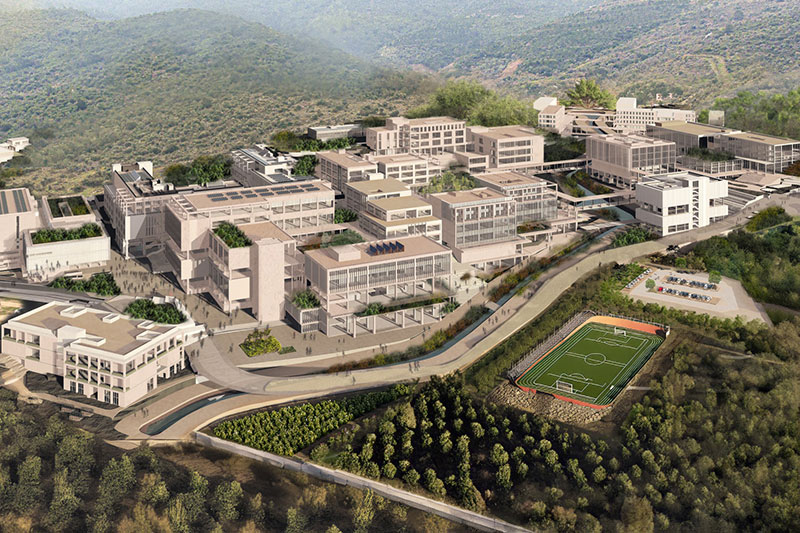
IZMIR UNIVERSITY OF ECONOMICS GÜZELBAHÇE CAMPUS
DetailsGLOBAL CAREER
As Izmir University of Economics transforms into a world-class university, it also raises successful young people with global competence.
More..CONTRIBUTION TO SCIENCE
Izmir University of Economics produces qualified knowledge and competent technologies.
More..VALUING PEOPLE
Izmir University of Economics sees producing social benefit as its reason for existence.
More..
You are one step ahead with your graduate education at Izmir University of Economics.