





- University
- Academic
- Schools/Vocational Schools
- Vocational School of Justice
- Vocational School
- Vocational School
- Department of Banking and Insurance (Turkish)
- Department of Computer Programming (Turkish)
- Department of Foreign Trade (Turkish)
- Department of Graphic Design (Turkish)
- Department of Interior Design (Turkish)
- Department of Construction Technology (Turkish)
- Department of Occupational Health and Safety (Turkish)
- Department of Media and Communication (Turkish)
- Department of Architectural Restoration (Turkish)
- Department of Radio and Tv Programming (Turkish)
- Department of Civil Aviation Cabin Services (Turkish)
- Department of Civil Aviation Transportation Management (Turkish)
- Department of Tourism and Hotel Management (Turkish)
- Department of Applied English Translation
- Vocational School Of Health Services
- Vocational School Of Health Services
- Department of Child Development (Turkish)
- Department of Physiotherapy (Turkish)
- Department of Paramedic (Turkish)
- Department of Opticianry (Turkish)
- Department of Medical Documentation and Secreteriat (Turkish)
- Department of Medical Imaging Techniques (Turkish)
- Department of Medical Laboratory Techniques (Turkish)
- Department of Elderly Care (Turkish)
- School of Applied Management Sciences
- School of Foreign Languages
- Faculties
- Faculty of Arts and Sciences
- Faculty of Fine Arts and Design
- Faculty of Law
- Faculty of Communication
- Faculty of Business
- Faculty of Engineering
- Faculty of Engineering
- Department of Computer Engineering
- Department of Biomedical Engineering
- Department of Electrical and Electronics Engineering
- Department of Industrial Engineering
- Department of Food Engineering
- Department of Genetics and Bioengineering
- Department of Aerospace Engineering
- Department of Civil Engineering
- Department of Mechanical Engineering
- Department of Mechatronics Engineering
- Department of Software Engineering
- Faculty of Health Sciences
- Medicine
- Graduate School
- Common Courses
- Schools/Vocational Schools
- Research
- Research Centers
- Library
- Smart Campus
- Technology Transfer Office
- İzmir Sciencepark
- Continuous Education Center (EKOSEM)
- Children's University
- Ethics Committee
- Teaching and Learning Center (EKOEĞİTİM)
- Psychology Application and Research Center
- Researcher Training Coordinatorship
- Research Collaborations And Innovation Coordinatorship
- Campus
- INTERNATIONAL
- Contact
- 25TH YEAR
Department of Nursing
GER 222 | Course Introduction and Application Information
| Course Name |
German Language IV
|
|
Code
|
Semester
|
Theory
(hour/week) |
Application/Lab
(hour/week) |
Local Credits
|
ECTS
|
|
GER 222
|
Fall/Spring
|
2
|
4
|
4
|
5
|
| Prerequisites |
None
|
|||||
| Course Language |
German
|
|||||
| Course Type |
Second Foreign Language
|
|||||
| Course Level |
First Cycle
|
|||||
| Mode of Delivery | - | |||||
| Teaching Methods and Techniques of the Course | Lecture / Presentation | |||||
| National Occupation Classification | - | |||||
| Course Coordinator | ||||||
| Course Lecturer(s) | ||||||
| Assistant(s) | - | |||||
| Course Objectives | The aim of this course is to enable students to communicate in the field of health by using four basic language skills at A2 level of the target language. |
| Learning Outcomes |
The students who succeeded in this course;
|
| Course Description | This course is designed to enable students to use target language skills at A2 level and above in relation to their profession in the health sector. |
| Related Sustainable Development Goals |
|
|
|
Core Courses | |
| Major Area Courses | ||
| Supportive Courses | ||
| Media and Management Skills Courses | ||
| Transferable Skill Courses |
WEEKLY SUBJECTS AND RELATED PREPARATION STUDIES
| Week | Subjects | Related Preparation |
| 1 | Professions / Services in the field of health Recognising professions in the field of health To be able to recognise and describe the services in the hospital. To be able to explain the daily routine in their own service. | Sağlık alanında terimler: https://www.hueber.de/media/36/Menschen_im_Beruf_Pflege_A2_Lernwortschatz_m_Linien.pdf |
| 2 | Health Problems / auxiliary tools To be able to tell patients and their health problems. Listening to a patient's health problem and being able to talk about a patient. To be able to read scientific short texts and interviews, to be able to offer help. | |
| 3 | Excretory organs / Job adverts in the field of health Reading and understanding a text about excretory organs. To learn about the occupations of a health professional. | |
| 4 | Care problems / Vital values Extract and understand the key points from a speech on health planning: problems, resources, objectives and measures. Reading comprehension of a text about hyper hypotension. | |
| 5 | Fever and its symptoms / Nutrition Body temperature / Fever and accompanying Symptoms Read and understand a technical text containing and recognise care recommendations and be able to talk about this condition. | |
| 6 | Bed care / Pain definition Reading text about bed care and hygiene in wards. Recognising pain, reading a text about painkillers and what precautions can be taken and talking about their own pain. | |
| 7 | Visa Chronic ‘COPD’ / Prospectus To read therapeutic measures in chronic obstructive pulmonary disease. Listening and explaining the use of metered dose inhalers. Noting information about the use of medication. ‘Verabreischungsformen beschreiben’. Introducing medicines | |
| 8 | Midterm. | |
| 9 | Drug preparation / Diagnostic equipment Reading a text about preparing medicines. Listening to a conversation between doctor and patient. Explaining medication intake to patients with a role-play. Reading a patient information about gastroscopy | |
| 10 | Excretory system / Blood collection Reading a patient guide about giving a disc sample. Listening and acting out a conversation during blood collection. | |
| 11 | Falls / Intervertebral disc operation Listening to a report on the fall and completing the information in the fall protocol. Post intervertebral disc operation. Listening to an emergency call. | |
| 12 | Read an email about a herniated disc and its consequences. Answering questions from relatives about behaviour after a disc operation. | |
| 13 | Oral Exam. | |
| 14 | Thrombosis / Patient self-care Listen to an interview about thrombosis. To be able to read a scale to determine the risk of thrombosis. Write about patients prone to thrombosis. Read a checklist about a full body wash. Describe the full body wash procedurJob description and training / Hand disinfection Reading the website of a health vocational school. . | |
| 15 | Bayram Review of the course | |
| 16 | Listening to a talk about hand disinfection Listen to an interview with a health worker. To tell about his/her profession and professional experiences |
| Course Notes/Textbooks | Valeska Hagner Menschen im Beruf Pflege (Hueber) Hueber Verlag GmbH & Co. KG, München, Deutschland 2016 (ISBN 978-3-19-401190-8) |
| Suggested Readings/Materials |
EVALUATION SYSTEM
| Semester Activities | Number | Weigthing |
| Participation |
1
|
10
|
| Laboratory / Application | ||
| Field Work | ||
| Quizzes / Studio Critiques | ||
| Portfolio | ||
| Homework / Assignments |
1
|
10
|
| Presentation / Jury | ||
| Project | ||
| Seminar / Workshop | ||
| Oral Exams |
1
|
20
|
| Midterm |
1
|
20
|
| Final Exam |
40
|
|
| Total |
| Weighting of Semester Activities on the Final Grade |
4
|
60
|
| Weighting of End-of-Semester Activities on the Final Grade |
1
|
40
|
| Total |
ECTS / WORKLOAD TABLE
| Semester Activities | Number | Duration (Hours) | Workload |
|---|---|---|---|
| Theoretical Course Hours (Including exam week: 16 x total hours) |
16
|
2
|
32
|
| Laboratory / Application Hours (Including exam week: '.16.' x total hours) |
16
|
4
|
64
|
| Study Hours Out of Class |
14
|
1
|
14
|
| Field Work |
0
|
||
| Quizzes / Studio Critiques |
0
|
||
| Portfolio |
0
|
||
| Homework / Assignments |
1
|
10
|
10
|
| Presentation / Jury |
0
|
||
| Project |
0
|
||
| Seminar / Workshop |
0
|
||
| Oral Exam |
1
|
8
|
8
|
| Midterms |
1
|
7
|
7
|
| Final Exam |
10
|
0
|
|
| Total |
135
|
COURSE LEARNING OUTCOMES AND PROGRAM QUALIFICATIONS RELATIONSHIP
|
#
|
Program Competencies/Outcomes |
* Contribution Level
|
|||||
|
1
|
2
|
3
|
4
|
5
|
|||
| 1 |
Has the fundamental theoretical and practical knowledge, attitudes, and behaviours in nursing and health science for the health and well-being of the individual, family, and public. |
-
|
-
|
-
|
-
|
-
|
|
| 2 |
Uses nursing skills with a holistic approach to meet the health care needs of the individual, family, and public. |
-
|
-
|
-
|
-
|
-
|
|
| 3 |
Follows evidence-based practices and current approaches while performing nursing practices. |
-
|
-
|
-
|
-
|
-
|
|
| 4 |
Follows scientific and technological improvements by adopting the importance of lifelong learning. |
-
|
-
|
-
|
-
|
-
|
|
| 5 |
Communicates effectively with individuals, families, communities and healthcare teams in practice setting. |
-
|
-
|
-
|
-
|
-
|
|
| 6 |
Makes multidisciplinary teamwork. |
-
|
-
|
-
|
-
|
-
|
|
| 7 |
Participates in scientific research, projects, and activities in the field of nursing. |
-
|
-
|
-
|
-
|
-
|
|
| 8 |
Uses problem-solving and critical thinking skills in nursing practice. |
-
|
-
|
-
|
-
|
-
|
|
| 9 |
Acts in accordance with legal and ethical values in nursing practice. |
-
|
-
|
-
|
-
|
-
|
|
| 10 |
Communicate with colleagues, patients, and their relatives using at least one foreign language. |
-
|
-
|
-
|
-
|
-
|
|
*1 Lowest, 2 Low, 3 Average, 4 High, 5 Highest
NEWSALL NEWS


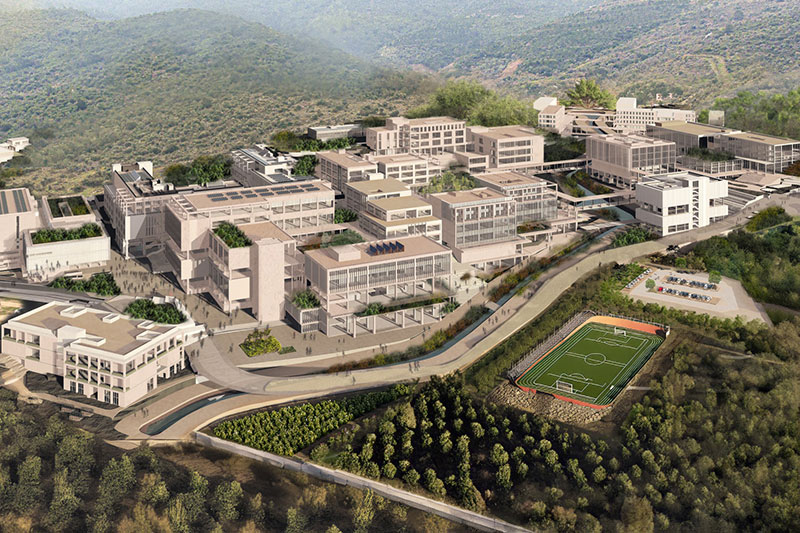
IZMIR UNIVERSITY OF ECONOMICS GÜZELBAHÇE CAMPUS
DetailsGLOBAL CAREER
As Izmir University of Economics transforms into a world-class university, it also raises successful young people with global competence.
More..CONTRIBUTION TO SCIENCE
Izmir University of Economics produces qualified knowledge and competent technologies.
More..VALUING PEOPLE
Izmir University of Economics sees producing social benefit as its reason for existence.
More..
You are one step ahead with your graduate education at Izmir University of Economics.